here & now
Product design challenge for Berkeley Innovation's Fall 2025 application process.
Timeline: 1 week
Tools: Figma, Google Forms
Skills: product & graphic design, user research, branding
the challenge:
In our fast-moving world, it’s easy to drift through the day on autopilot, leading to disconnection from ourselves, our relationships, and the present moment. Thus "how might we help people feel more present in their day-to-day lives?"
*Click here to skip to my solution
user research:
With the research goal of learning about individuals’ practices & attitudes related to being present in their daily lives, I conducted a user survey via Google Forms towards a target audience of young adults in and out of school.
From a research pool of 19 young adults, with 11 currently in school and 7 either working or navigating post-grad life…
94% feel moderately to extremely busy daily
1-3 more hours are spent on autopilot than on intentional leisure, on average
0% feel extremely connected to the present moment or to others
100% would practice a form of self-care if they had more time in their dayhow busy their schedule is and how they spent their time
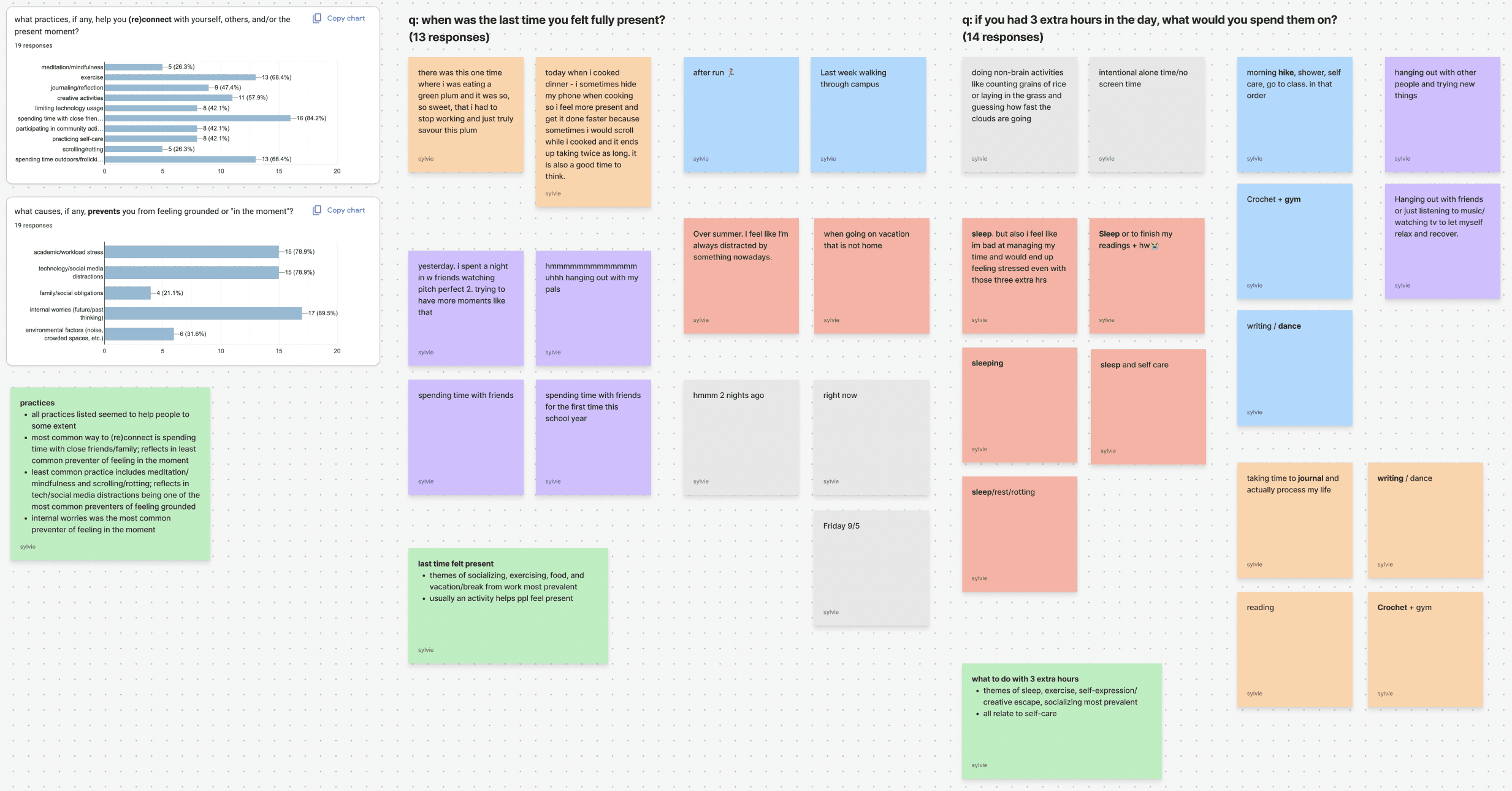
multi select & free response results and affinity mapping
Key insights were that…
People feel busy!! Following a typical 7-9 hours of work, more time is typically spent on autopilot than doing leisure activities
Perceived busyness is negatively correlated with perceived presence –– people don’t often feel present on a typical, busy day
The most common way to (re)connect was spending time with close others, reflecting the results of social obligations being the least preventing of feeling present.
One of the least common practices to (re)connect was scrolling/rotting, reflecting tech/social media distractions preventing people from feeling present the most.
Doing activities usually helped people feel present; socializing, food, exercising, and vacationing/ taking a break from work were the most prevalent themes
If people had 3 extra hours in the day, they would practice a form of self-care –– sleep, exercise, self-expression/creative escape, and socializing were the most prevalent themes
Thus, a solution that addresses pain points might…
be non-digital
be a form of self-care
be quick and easily integrable into busy schedules
be related to socializing, food, exercise, and/or self- expression
prompt intention and aim to ground to the present moment
ideation
Starting with divergent methods, I brainstormed ideas that targeted pain points before affinity-mapping them to find themes; journaling and shared activity were the most frequent themes and provided solutions that checked all the boxes.
Mapping the brainstormed ideas on a 2x2 matrix in convergent ideation, journaling and shared activities were the most high impact with low effort, solidifying the direction of a journal that could double as a form of self-reflection and socializing.
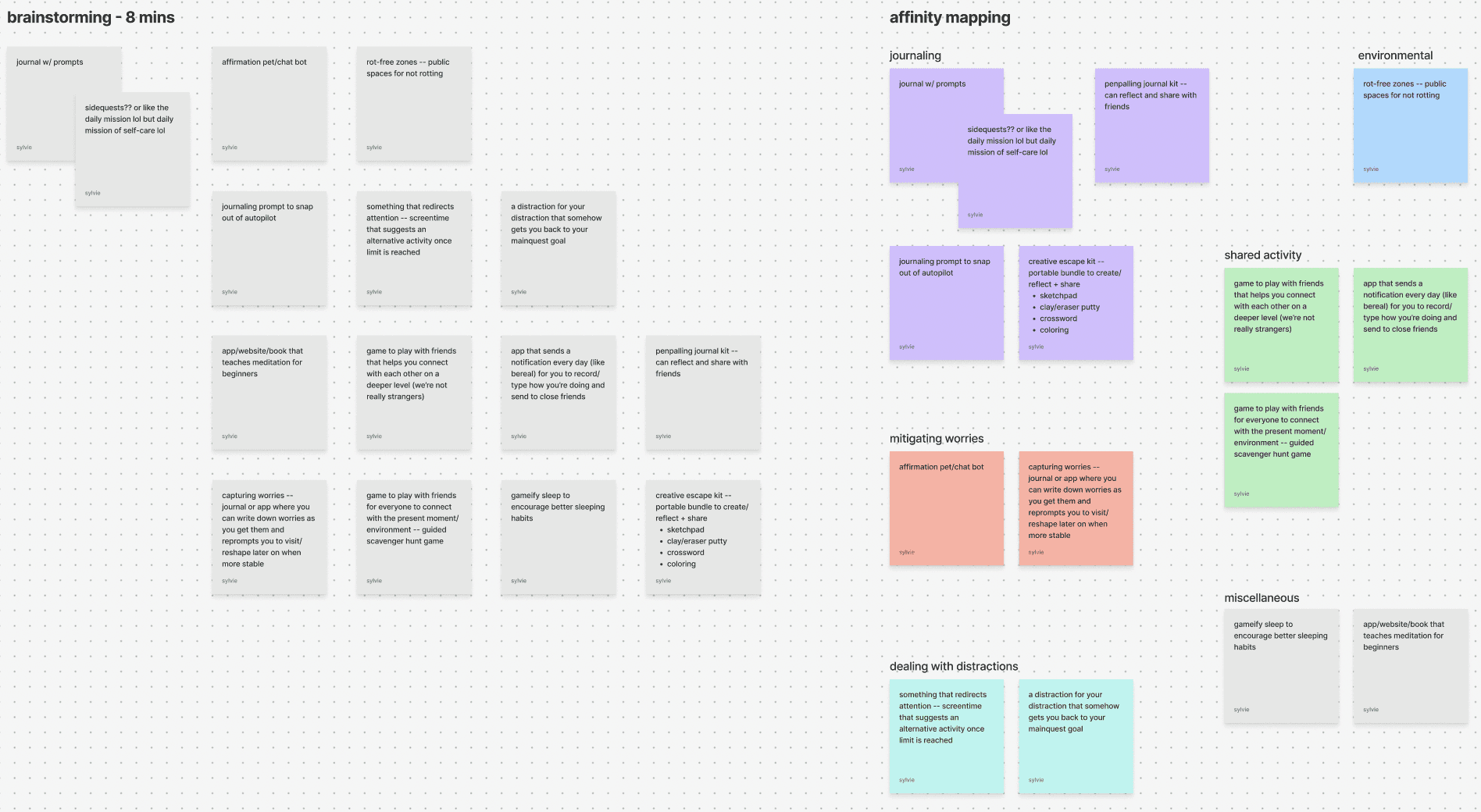
divergent ideation — brainstorming & affinity mapping
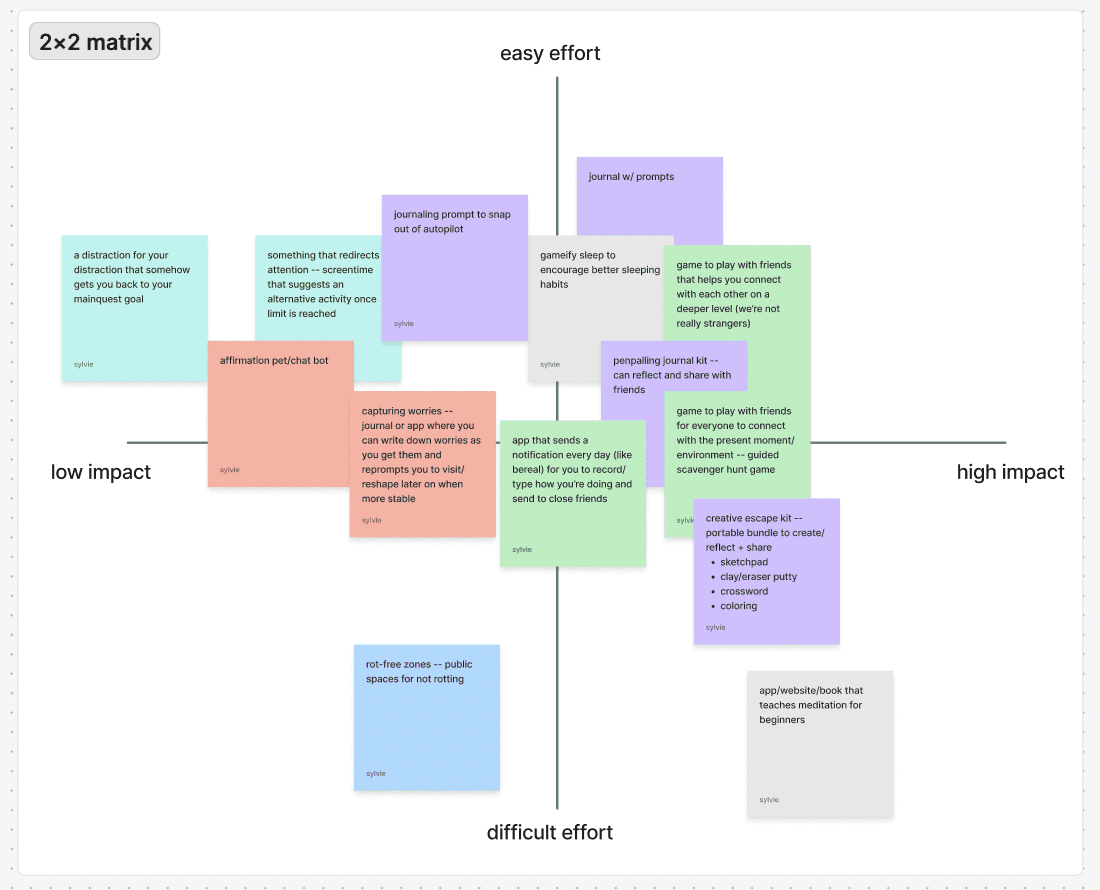
convergent ideation — 2x2 matrix
design process
Lo-fi sketches for journal spreads included three main page types (which could also be used in multiple ways):
journal: blank pages and introspective reflection & mindfulness prompts
games: to be played with a loved one in-person
penpal: to be sent to anyone, anywhere
Branding was inspired by inspired by calming, warm, colors & fonts, and ranging a variety of layouts and purposes for flexibility and creativity. Three main background assets were used to symbolize each of the three page categories, utilizing different blend modes for effect.
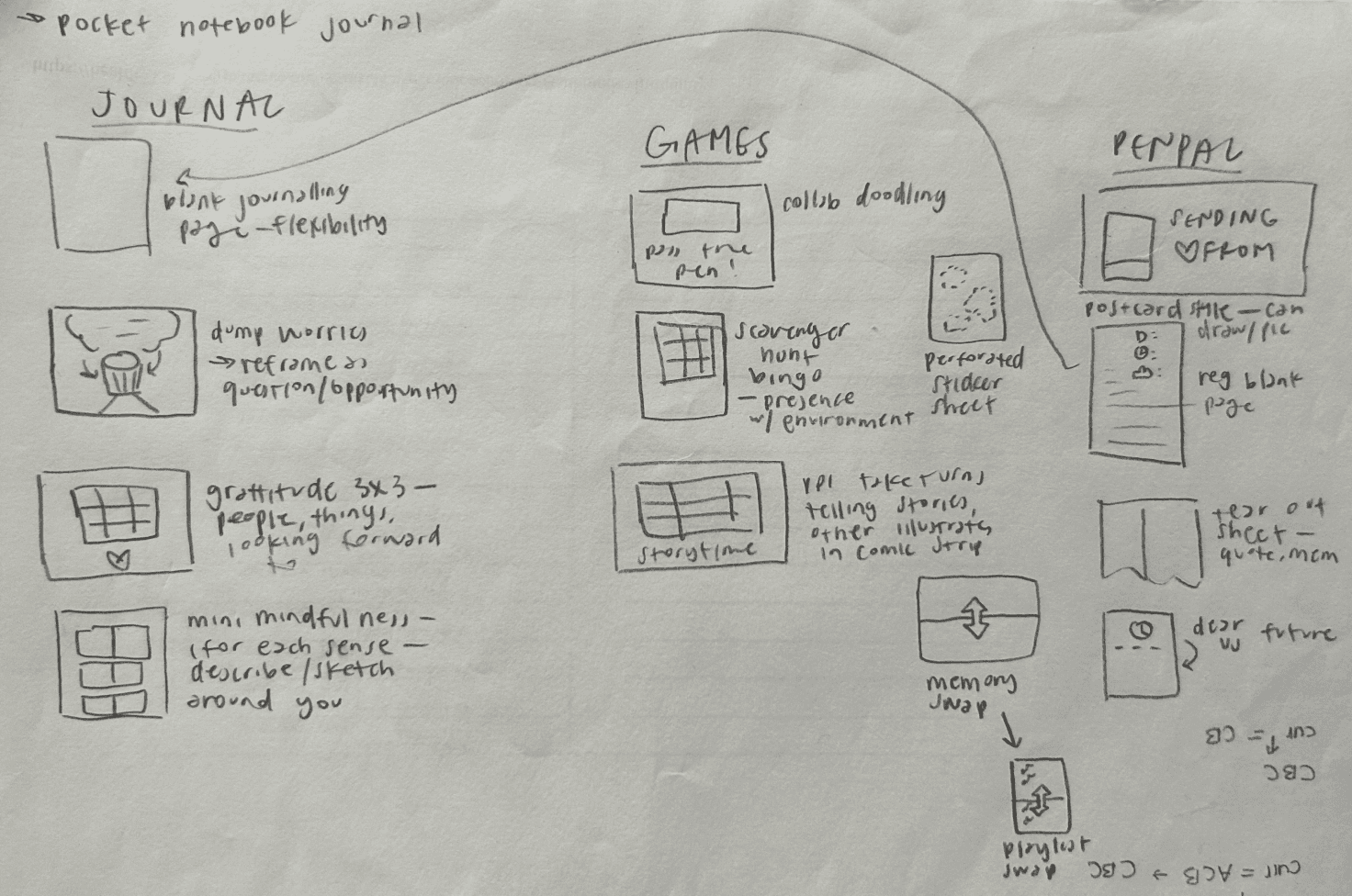
lo-fi sketches
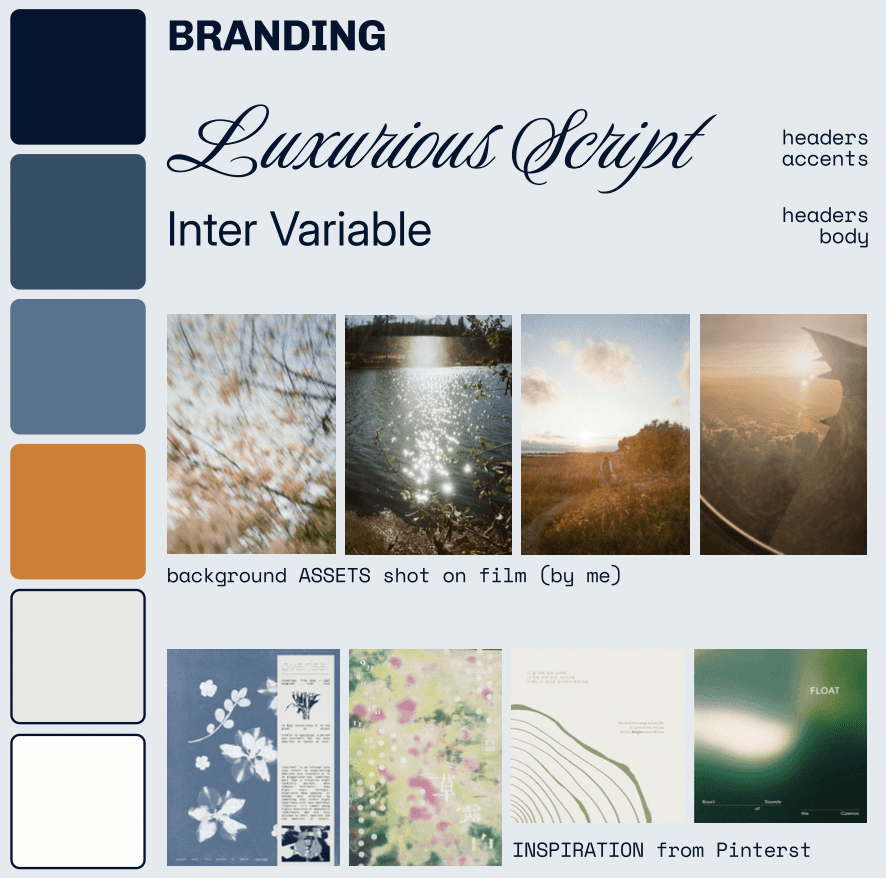
inspiration & design system — branding & assets
final concept
here & now is a pocket notebook that doubles as a journal and activity booklet.
Journal prompts encourage self-reflection and mindfulness to ground and connect to oneself, while activities to be shared with loved ones live or distant spark connection with one another and our communities. Structured prompts and blank lined pages also allow for the notebook fit any schedule and purpose.
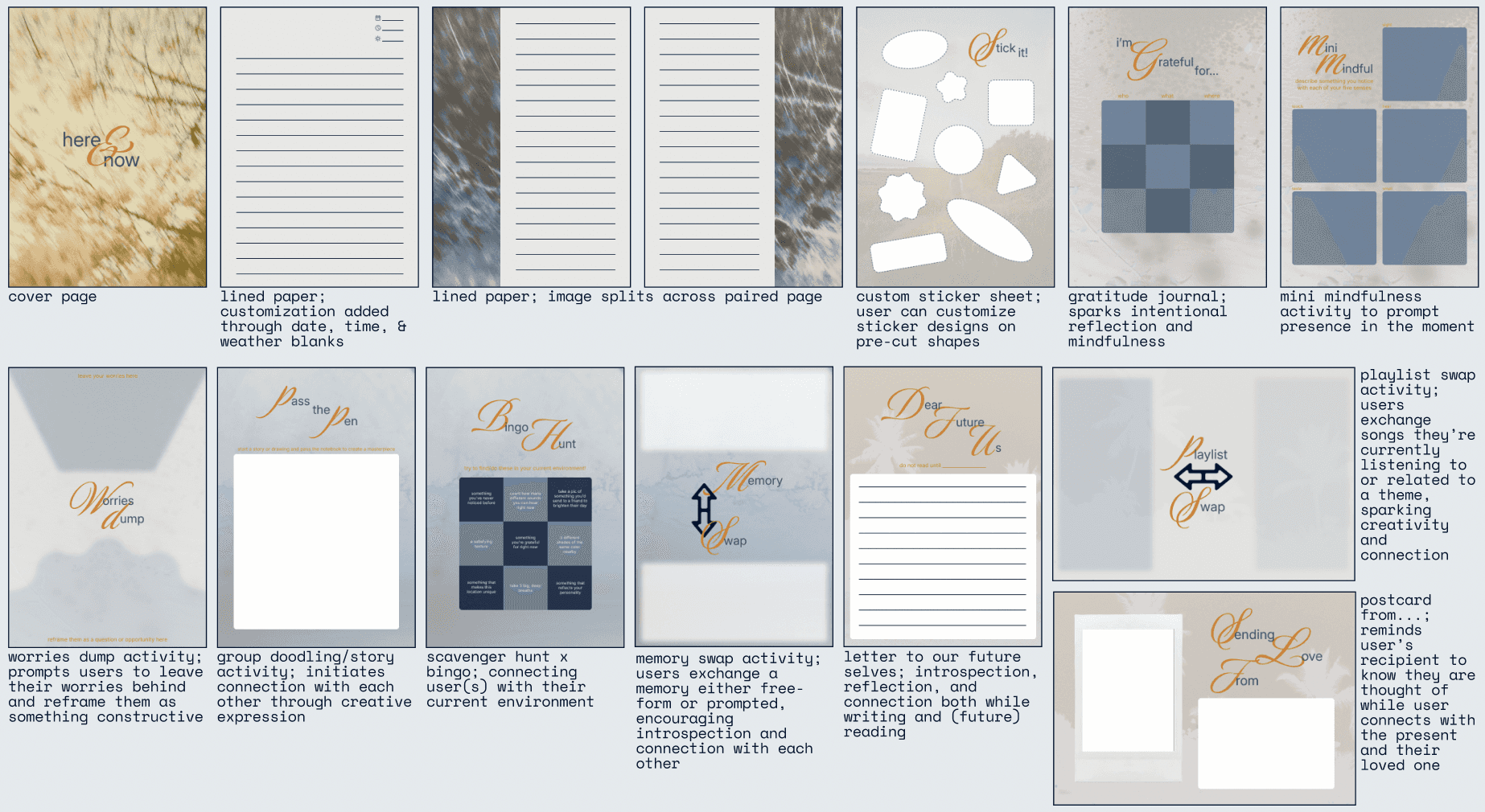
hifi spread designs & explanations
______
Despite not making it into the club, I was still proud of my design challenge, especially since it was my first solo one and I surprised myself with how much I could get done — from research to designing — in just a few days. If I had more time, I would brainstorm more spread ideas (maybe a sleep log since it was a popular theme in the survey responses), I would add more descriptions, design with print bleeds and writing accessibility at the front of mind, and explore mockups. Thank you to BI for the challenge and for prompting me to explore ways to feel more present!